
She has been waiting for a long time.
Waiting for the phone call that never came. The apology that was owed but never given. The “I was wrong” that would finally let her exhale. And as the years passed, that wound didn’t just stay open; it started to shape her. How she trusts. How she loves and how she lets people in.
A Listening Heart

Take the first step towards healing and growth. Book your free call now and let’s journey together in faith and friendship.
Maybe that’s you today, sweet friend.
Maybe someone hurt you in a way that still takes your breath away when the memory surfaces, a parent who should have protected you, a husband who walked away, a friend who betrayed your confidence, a child who said things you can’t unhear. And they have never once said they were sorry.
So you’re left holding a question that feels impossible: How do you forgive someone who doesn’t even think they did anything wrong?
I taught on this recently, watch the full video below, then keep reading for a deeper dive:
Let me sit with you in that tension for a moment, because I think we need to clear something up before we can move forward.
Forgiveness Is Not What You Think It Is
Most of us grew up believing that forgiveness meant saying “it’s okay.” That forgiving someone meant their behavior was acceptable. That releasing the offense meant the offense didn’t really matter.
No wonder we can’t do it.
Because it wasn’t okay. What happened to you was real, and the wound is real. And no amount of spiritual language should talk you out of that reality.
But here’s what God’s Word actually says about forgiveness, and this changed everything for me.
Forgiveness is not reconciliation. Forgiveness is not trust restored. Forgiveness is not the same as letting someone back into your life without changed behavior.
Forgiveness is releasing your right to be the one who makes them pay.
Colossians 3:13 says, “Bear with each other and forgive one another if any of you has a grievance against someone. Forgive as the Lord forgave you.”
Notice what it doesn’t say. It doesn’t say wait until they apologize or forgive only when they’ve earned it. It says forgive because you were forgiven, not because they deserve it.
Who Forgiveness Actually Frees
Here’s the hard truth, sis, and I say it with so much love: unforgiveness doesn’t punish the person who hurt you. It punishes you.
The person who wounded you may be sleeping just fine. Moving on with their life and not even thinking about what they did to you at all. Meanwhile, you are carrying that weight. You are waking up with it, replaying the conversation and feeling the anger surge when their name comes up.
They handed you a burden, and you’ve been faithfully carrying it for them.
Hebrews 12:15 warns us about letting a “bitter root” grow in us — because it doesn’t just affect the person we’re bitter toward. It defiles us. It bleeds into our relationships, our peace, and our ability to receive love.
Forgiveness is an act of self-liberation.
It’s saying: “I am no longer going to let what you did have authority over my present. I am releasing this — not because you deserve it, but because I belong to God and I deserve to be free.”
What to Do When They Never Apologize
So what does this actually look like, practically, when the apology is never coming?
1. Acknowledge the wound honestly before God.
Don’t rush to forgiveness before you’ve allowed yourself to grieve. Sit with Jesus and tell Him exactly how much it hurts. He can handle your anger. He already knows. Psalm 62:8 says to pour out your heart before Him. He is our refuge. Bring the ugly, unfiltered truth of your pain to your Heavenly Father, who actually sees it.
2. Surrender your need for them to understand.
One of the most painful parts of an unapologized wound is the desperate need to be seen — for the other person to truly understand what they did and how it affected you. When that understanding never comes, it can feel like the wound will never close. But God says, “Vengeance is mine; I will repay” (Romans 12:19). You do not need them to understand. God understands, and He is the only judge who matters.
3. Choose forgiveness as an ongoing decision, not a one-time event.
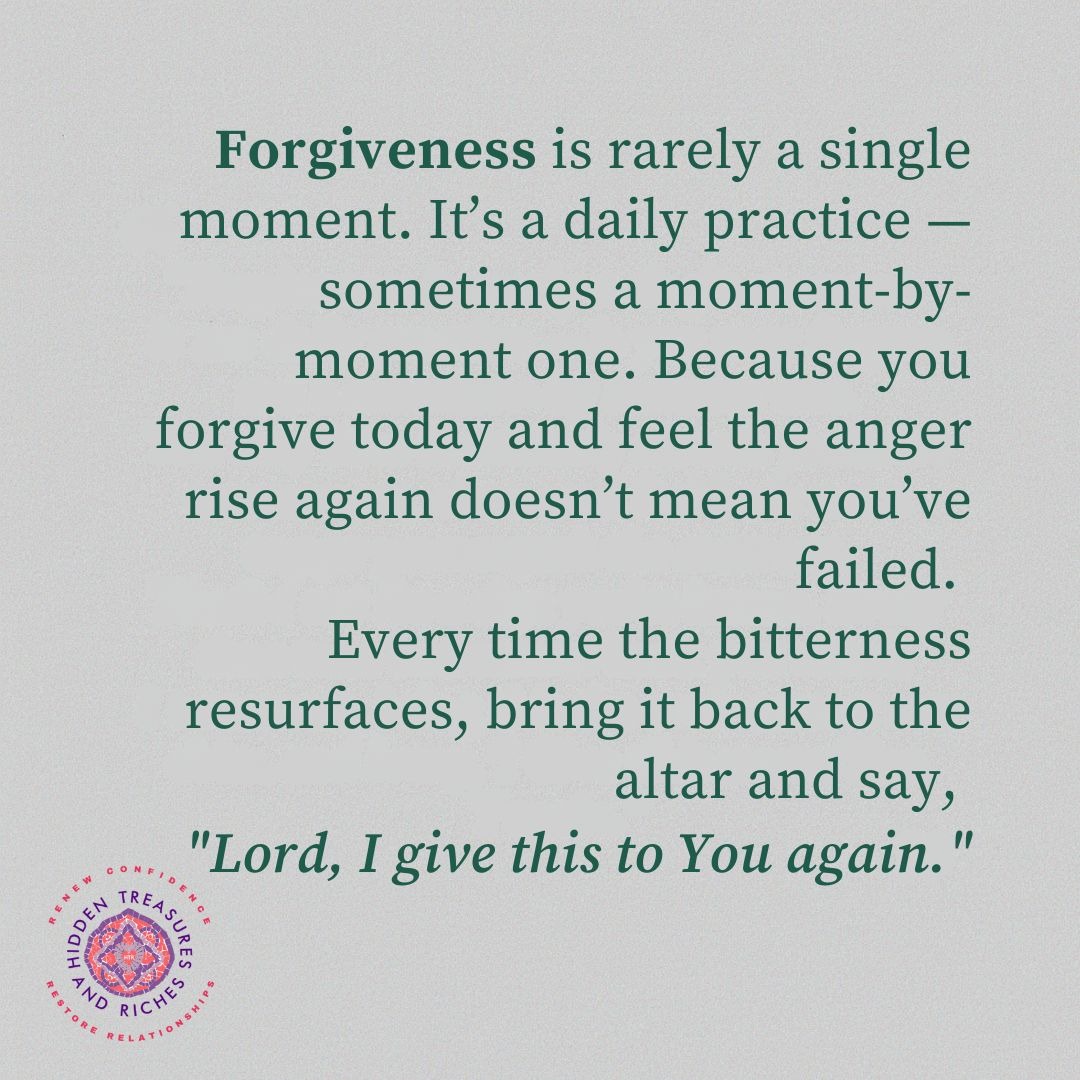
Forgiveness is rarely a single moment. It is a daily practice — sometimes a moment-by-moment one. You may forgive today and feel the anger rise again tomorrow when something triggers the memory. That’s not a sign you failed. That’s a sign you’re human. Every time the bitterness resurfaces, bring it back to the altar and say, “Lord, I give this to You again.”
4. Separate forgiveness from trust.
You can forgive someone completely and still have wise, healthy boundaries with them. Forgiveness does not mean you hand someone access to hurt you again. Jesus told His disciples to be “wise as serpents and harmless as doves” (Matthew 10:16). Wisdom and forgiveness can coexist.
5. Ask God to do what you cannot do on your own.
If you’re sitting there thinking, “I genuinely cannot do this,” — I hear you. And I want you to know that it is the most honest place you can start. You cannot manufacture forgiveness through willpower. But you can ask the Holy Spirit to work it in you. “Lord, I am willing to be made willing.” That prayer is enough to begin the process.
You Are Not Stuck in This Story
Sweet friend, I want you to hear this clearly: the person who hurt you does not have the final word over your healing.
They may never apologize, never change, and they may go to their grave believing they did nothing wrong. And still, you can be free.
Your healing is not contingent on their remorse. Your wholeness is not waiting on their repentance. God’s restoration is bigger than what they withheld from you.
Isaiah 61:3 says God gives “beauty for ashes, the oil of joy for mourning, the garment of praise for the spirit of heaviness.” He didn’t wait for the person who caused the ashes before He started the exchange. The exchange is between you and Him.
This is not the end of your story.
There is treasure in this — I promise. You’ll experience a depth of compassion, a capacity for grace, a closeness with Jesus that only comes from learning to forgive what feels unforgivable. And on the other side of this, you will have something to offer other women who are exactly where you are right now.
You are not alone. You are seen. And you are not stuck.
If this message touched something in you, I’d love for you to come share in the Hidden Treasures Community — a safe space for women just like you to do the deeper work together. You don’t have to walk this out alone.
You may also like Living a Life of Deep Forgiveness
Weathering Storms: Finding Treasures in the Ruins by Dr. Temitope Keku